
SUSTAINABLE BUILDING / SOLAR VENTILATION
Keep your home cool with less energy
Solar-powered DC attic ventilation: a design concept for buildings that accumulate less heat, support comfort and use energy thoughtfully.
Sunlight as both the challenge and the resource
On sunny days, roofs receive heat that can transfer into the attic and through the ceiling to occupied rooms. Roof materials, insulation and ventilation influence how much of that heat reaches the space below.
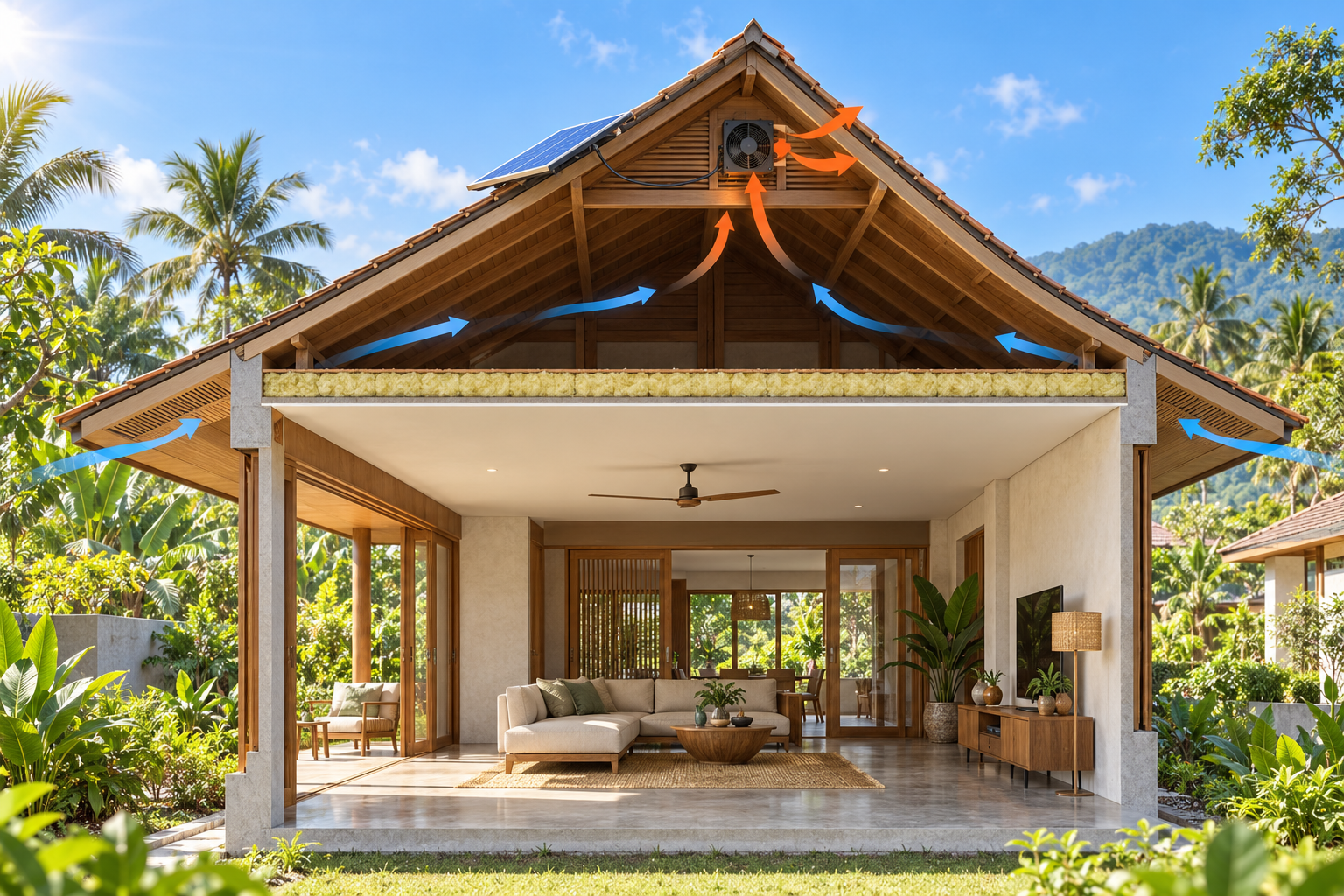
One sustainable building concept uses sunlight to power active attic ventilation. A DC motor fan draws energy from photovoltaic panels, helping remove hot attic air during periods when solar radiation often creates the greatest roof heat load.
Design a complete airflow path
Natural ventilation depends on wind and buoyancy, which vary with roof geometry and vent locations. A powered fan can assist exhaust while adequately sized outdoor openings supply replacement air.
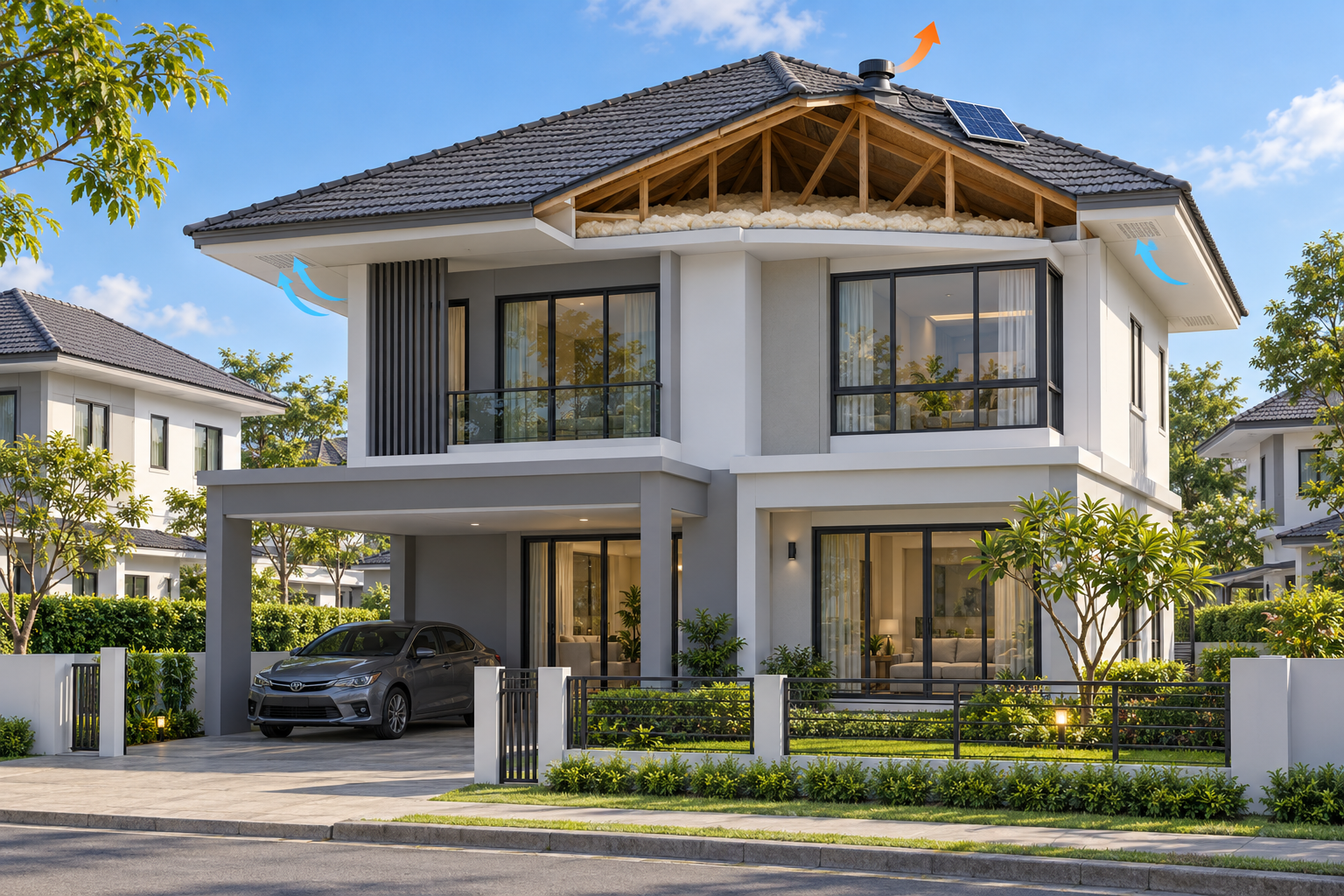
One approach uses soffit inlets and an exhaust near the upper roof or gable. The path should sweep the intended attic area without short-circuiting between nearby openings. Lower attic temperatures do not guarantee a particular indoor temperature reduction; the ceiling and roof assembly also matter.
More sunlight can support more ventilation
PV panels produce DC electricity. A compatible controller can supply a DC fan without an AC conversion stage. In a standalone solar-only system without grid backup, the fan’s operating electricity comes entirely from sunlight.
Output responds to solar irradiance, not simply hotter weather. Higher panel temperatures can reduce efficiency, so shading and panel cooling also matter. U.S. Department of Energy — Solar Photovoltaic Performance and Efficiency Basics.
A simple system with clear operating limits
A battery-free system reduces equipment and maintenance, but available fan power falls as sunlight weakens. Panel voltage, current, motor starting requirements and controller compatibility must be matched.
During cloudy periods or after sunset the fan may stop while stored roof heat remains. Storage or backup power should be assessed only where the building needs it. A system using grid backup cannot claim exclusively solar-powered operation.
Treat roof, ceiling and fan as one system
This concept should be evaluated for an attic designed to ventilate to outdoors. It should not be added to a sealed or conditioned attic without reviewing that assembly. Appropriate roof materials, shading and insulation remain essential.
Seal leaks between occupied rooms and the attic. An exhaust fan with inadequate outdoor inlet area may draw conditioned air through ceiling leaks, increasing air-conditioning demand. Solar fan power does not guarantee whole-building energy savings. US Department of Energy guidance discusses powered attic fan limitations, insulation and air sealing.
Specify for the actual building and measure results
Select airflow against the resistance of vents, screens and ducts. Match PV and controls to the motor and consider noise, rain, insects, moisture, electrical safety and maintenance access.
In Thailand’s hot, humid climate, evaluate moisture conditions and ceiling performance alongside attic temperature. Compare comfort and building energy use before and after under similar weather and occupancy conditions.
Future buildings start with understanding nature
Sunlight adds heat to a roof while offering energy to help remove it. Solar DC ventilation connects building design, engineering systems and renewable energy in a practical way.
Siamphat’s approach considers the complete system: limit incoming heat, establish a real airflow path, select suitable equipment and verify performance. The aim is less heat accumulation, better comfort and lower grid dependence where solar energy is appropriate—not a promise that ventilation alone will eliminate cooling demand.
Every space has its own requirements. Let’s start by understanding yours.
Discuss your project